

You Just Bought a Brand-New Home. What Could Possibly Go Wrong?
That’s what most new construction buyers think. The paint is fresh, the appliances are shiny, and nobody has ever lived there before. Surely a new home is a safe home, right?
Not always.
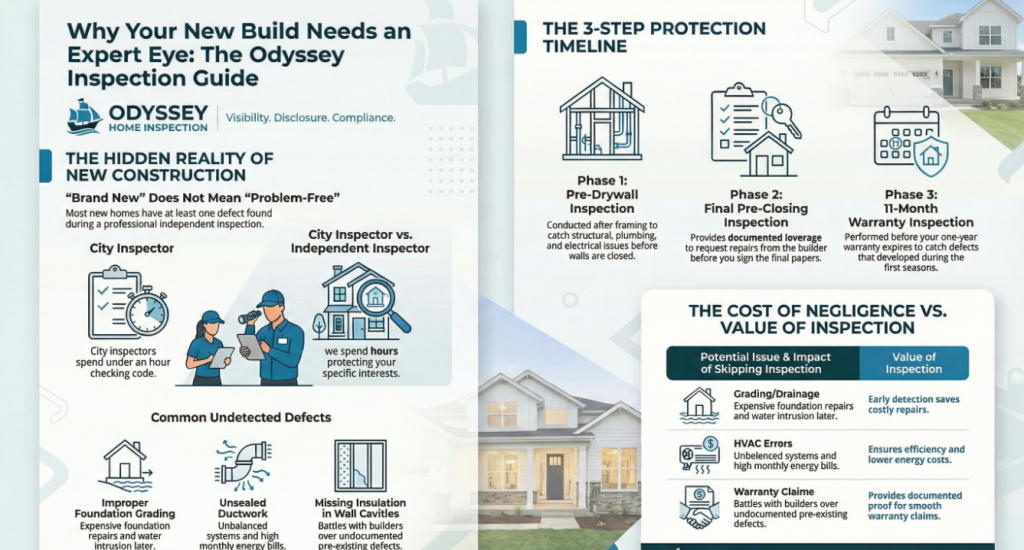
The truth is, new construction homes have defects more often than most buyers realize. According to industry data, the majority of newly built homes have at least one defect found during a professional inspection, and many have several. Some are minor. Some are not.
The bottom line is this: brand new does not mean problem-free. And the only way to know for sure what you are buying is to have an independent inspector take a thorough look before you hand over your money.
The Myths That Put New Buyers at Risk
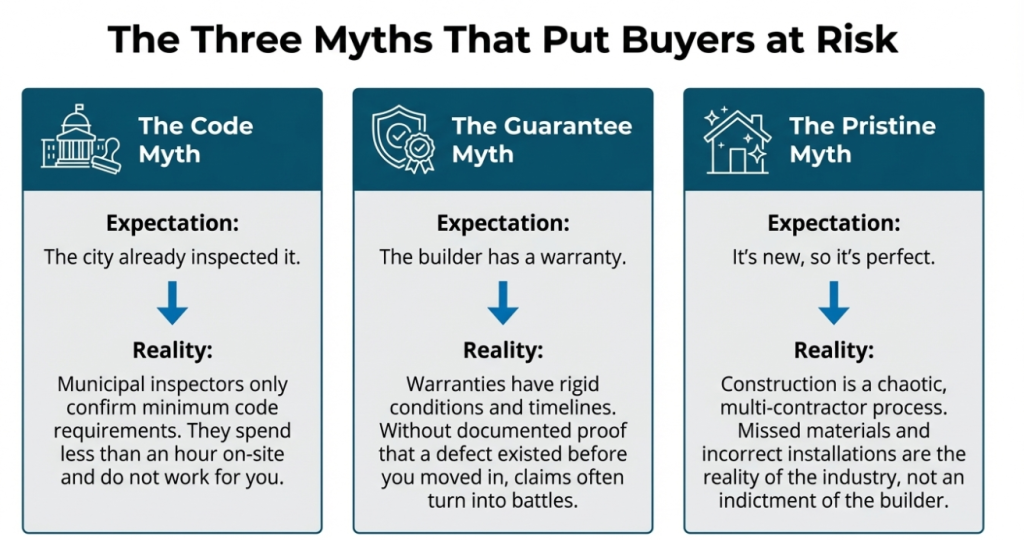
Before we get into what can go wrong, let’s address the three things most new construction buyers tell themselves to skip the inspection.
“The city already inspected it.”
Municipal inspectors do visit new construction sites, but their job is to confirm the home meets minimum code requirements. They are not working for you. They are not checking every system, every corner, or every detail. They often spend less than an hour on a home and move on. A professional home inspector spends several hours focused entirely on protecting your interests.
“The builder has a warranty.”
Warranties sound reassuring, but they come with conditions, timelines, and fine print. If you cannot prove when a defect started or show documentation that it existed before you moved in, getting warranty work covered can become a battle. An inspection report gives you exactly that documentation.
“It’s new, so it’s perfect.”
New homes are built by people, under deadline pressure, in all kinds of weather, by multiple subcontractors who are not always on the same page. Mistakes happen. Materials get installed incorrectly. Things get missed. That is not an indictment of any builder. It is just the reality of construction.
What Can Actually Go Wrong in a New Build
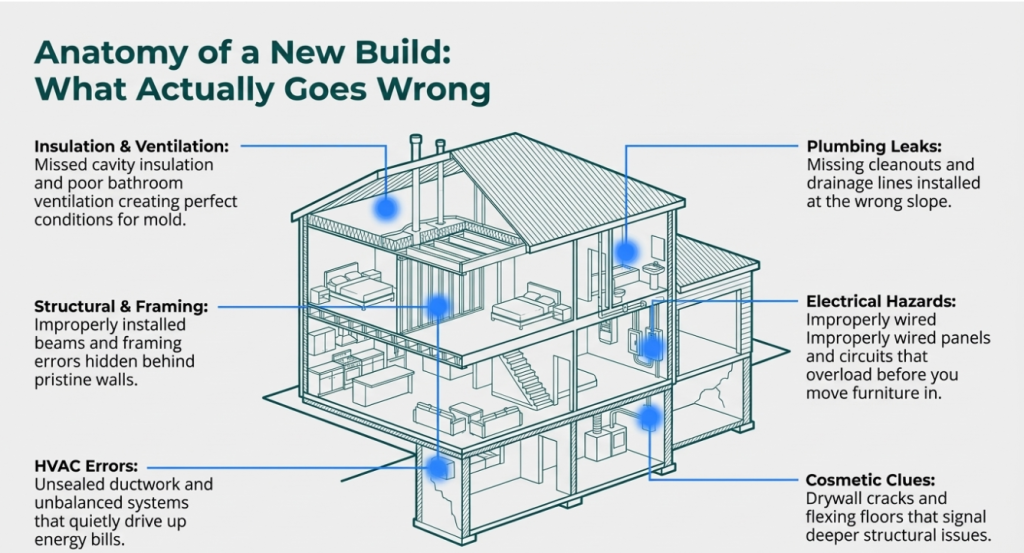
Here is what professional inspectors commonly find in newly constructed homes:
Structural problems. Framing errors, improperly installed beams, and foundation issues that are far easier and cheaper to address before the walls go up (or before you close).
Plumbing problems. Drainage lines installed at the wrong slope, missing cleanouts, leaks behind walls, and water pressure issues that seem fine on day one and become a headache by month three.
Electrical issues. Wiring that does not meet code, missing ground fault outlets in kitchens and bathrooms, improperly wired panels, and circuits that are overloaded before you have even moved in your furniture.
HVAC installation errors. Ductwork that is not sealed, systems that are not balanced, and equipment that was not commissioned correctly, all of which will quietly drive up your energy bills while making parts of your home uncomfortable.
Insulation and ventilation gaps. Missed insulation in a wall cavity or attic, poor ventilation in bathrooms, and moisture issues that create the perfect conditions for mold well before your first anniversary in the house.
Grading and drainage. If the ground around your foundation slopes toward the house instead of away from it, water will follow. This is one of the most commonly overlooked issues in new construction and one of the most expensive to fix later.
Cosmetic issues that signal something deeper. Cracks in drywall, doors that do not close right, floors that flex where they should not. Sometimes these are cosmetic. Sometimes they point to something structural underneath.
The 3 Types of New Construction Inspections You Should Know About
One thing that surprises many buyers is that there are actually multiple points during the construction process where an inspection makes sense.
- The Phase or Pre-Drywall Inspection
This happens after framing is complete but before the drywall goes up. It is the best possible time to catch structural, electrical, and plumbing issues because everything is still visible. Once those walls are closed, many problems become invisible and far more expensive to address.
- The Final or Pre-Closing Inspection
This is the most common inspection type. It happens when the home is complete but before you sign at closing. This gives you a full picture of the home’s condition and, importantly, gives you documented leverage to request repairs before you become the owner.
- The 11-Month Warranty Inspection
Most builders offer a one-year warranty on workmanship. An 11-month inspection catches defects that have developed since you moved in while you still have time to submit warranty claims. This one is especially valuable because it catches issues that only show up after a home has been lived in through different seasons.
What a Home Inspector Does That a City Inspector Does Not
The difference comes down to who the inspector is working for and how deeply they look.
A city inspector works for the municipality. Their job is code compliance, not buyer protection. They check specific items on a checklist and move on.
A professional home inspector works for you. They spend hours examining your home from the roof to the foundation. They document everything with photos and a detailed written report. They look at systems the city inspector never touches, including insulation levels, attic ventilation, grading, appliances, and more.
They are also not in any way connected to your builder, which means their findings are completely unbiased.
What Happens When You Skip the Inspection
Buyers who skip inspections on new construction tend to find out why they should not have within the first year or two of ownership.
The most common outcomes are unexpected repair bills that feel outrageous on a home that is barely a year old, warranty disputes where the builder argues the problem was caused by the homeowner, safety issues that were present from the start but went undetected, and resale complications when the next buyer’s inspector finds things that you never knew about and did not disclose.
An inspection does not guarantee nothing will ever go wrong. It does give you the best possible picture of what you are buying, before you are committed.
How Much Does a New Construction Inspection Cost?
A typical new construction inspection runs between $300 and $500 depending on the size of the home and your location. Phase inspections and warranty inspections are often priced similarly.
Think about it this way: the average cost of a single unexpected repair after closing is several times the cost of an inspection. A missed HVAC issue, a drainage problem, or an electrical defect can easily run into thousands of dollars. The inspection is almost always the best money you spend in the home buying process.
When to Book Your Inspection
Timing matters more than most buyers realize.
For a pre-closing inspection, you want to book as soon as you have a confirmed closing date, ideally two to three weeks out. This gives the inspector time to schedule and gives you time to review findings, request repairs, and still close on time.
Do not wait until the week before. Inspectors book up quickly, and rushing the process puts you at a disadvantage.
For a pre-drywall inspection, coordinate with your builder as soon as framing and rough-ins are complete and before insulation and drywall are scheduled to go up. That window can be short, so communicate early.
For an 11-month inspection, put a reminder on your calendar the day you close. It is easy to forget and harder to act on once your warranty window has passed.
Schedule Your New Construction Inspection
If you are buying a new construction home, or if you are approaching that one-year mark in a home you already purchased, now is the time to act.
Our inspectors are certified, experienced, and completely independent. We work for you, not the builder. We give you a clear, detailed report so you know exactly what you have and exactly what to do about it.
Frequently Asked Questions
Do I really need an inspection if the builder offers a warranty?
Yes. The warranty only covers what can be proven and documented. An inspection creates that documentation before you close, and an 11-month inspection creates it before the warranty expires.
Can I be there during the inspection?
Yes, and we recommend arriving toward the end of the inspection for a final walk-through. This allows the inspector to complete their process without interruptions, while still giving you dedicated time to review key findings, ask questions, and better understand your new home.
How long does it take?
Most new construction inspections take two to four hours depending on the size and complexity of the home. Pre-drywall inspections are typically shorter.
What happens if the inspector finds something?
You will receive a written report with photos and descriptions of every finding. From there, you can negotiate repairs with the builder before closing, submit warranty claims, or simply make informed decisions about how to proceed.