HVAC systems in the Sacramento Valley work harder than in most parts of the country. Triple-digit summer heat, cold valley fog winters, wildfire smoke season, and wide temperature swings put real strain on heating and cooling equipment. For buyers and homeowners, the HVAC portion of a home inspection is one of the most useful evaluations you can request. It tells you whether the system can keep up, how much life it has left, and what it will cost to repair or replace. When home inspectors in Sacramento open up the air handler and walk through the system as part of a general home inspection, the findings often reshape buying decisions, repair negotiations, and replacement budgets.
Why HVAC Findings Matter More in the Sacramento Valley
The Central Valley climate is unforgiving on residential equipment. Cooling loads run for months at a time. Older homes often have undersized or poorly balanced systems that struggle through 100-degree stretches. Wildfire smoke season adds particulate stress to filters, evaporator coils (the indoor cooling component that absorbs heat from the air), and ductwork. A few specifics worth knowing before you schedule:
- The average air conditioner lifespan is 12 to 15 years. Furnaces typically last 15 to 20.
- Sacramento homes built before about 2010 may still run on R-22 refrigerant, which has been phased out and is now expensive to service.
- Dust, pollen, and smoke accelerate filter and coil contamination, which reduces system performance and shortens equipment life.
- California’s Title 24 energy code shapes how new HVAC equipment must be installed, including duct sealing, refrigerant charge verification, and minimum performance ratings.
This is where a thorough walkthrough by experienced home inspection companies in Sacramento, CA becomes valuable. The inspector documents what the system is, what condition it is in, and what concerns deserve a closer look from a licensed HVAC contractor. At Odyssey Home Inspection, the HVAC evaluation is included in our general home inspection.
What a General Inspection May Reveal About Your HVAC
The HVAC walkthrough is non-invasive. Inspectors do not disassemble equipment, recover refrigerant, or perform technician-level diagnostics. What they do evaluate matters on its own:
- Furnace condition: Age, brand, model, visible heat exchanger condition, flame sensor function, and gas connection integrity
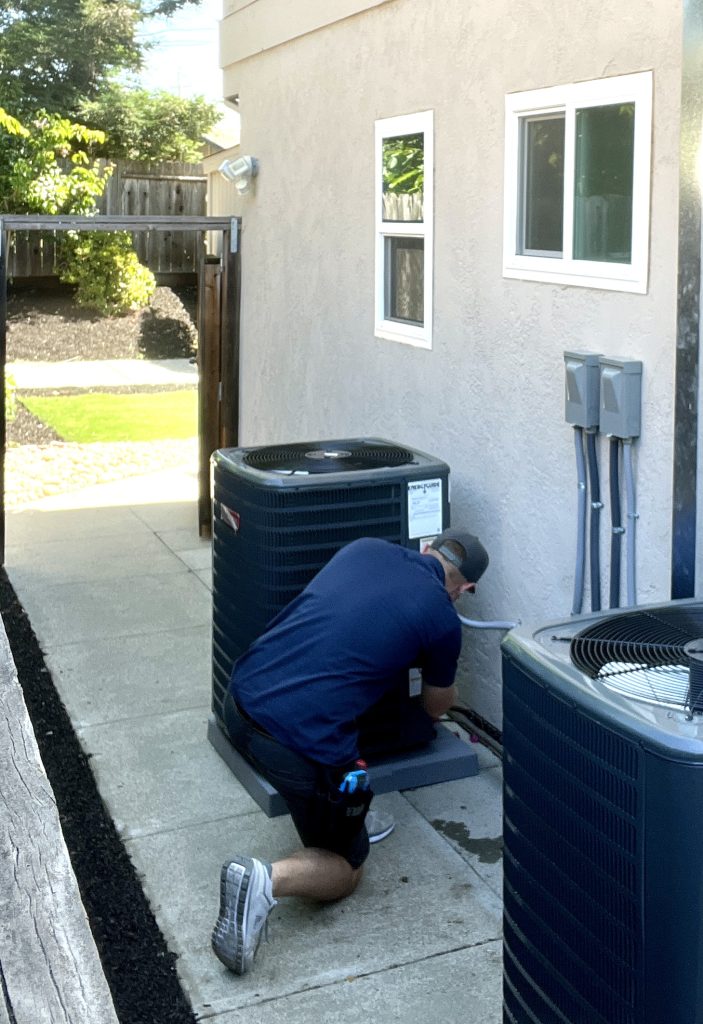
- Air conditioner condition: Outdoor unit age, condenser coil condition, refrigerant line insulation, and electrical disconnect
- Operational test: Running the system in both heating and cooling modes to verify response and supply air temperature differential
- Thermostat function: Proper response, programmable functions, and wiring at the unit
- Ductwork where accessible: Visible damage, disconnected sections, insulation condition, and obvious sizing issues
- Filter condition: Whether the filter is sized correctly, clean, and changed on a reasonable schedule
- Combustion air and venting: Proper draft on gas-fired equipment, condition of flue piping, and carbon monoxide concerns
If issues turn up, the inspector documents them with photographs and recommends a licensed HVAC contractor for further evaluation.
Common Sacramento HVAC Findings
HVAC findings that show up in Sacramento inspection reports regularly:
- Aging R-22 systems still in service. The refrigerant has been phased out, and service costs have climbed sharply for any system that needs a recharge.
- Improperly sized equipment. Oversized air conditioners short-cycle (turn on and off rapidly) and fail to dehumidify properly. Undersized systems run constantly without keeping up.
- Closet furnaces with combustion air problems in older homes where laundry, storage, or remodeling has reduced the air supply around the equipment.
- Disconnected or crushed ductwork in attics and crawl spaces, which can waste 20 to 30 percent of system output before conditioned air reaches the registers.
- Missing or improperly installed condensate drains that cause water damage to ceilings, walls, and flooring.
- Outdated thermostats wired incorrectly during do-it-yourself upgrades.
Each of these gets documented with severity ratings so homeowners and buyers can prioritize repairs without panic.
Five Things Homeowners Can Check Between Inspections
These habits help catch warning signs between inspections:
- Replace the air filter every 1 to 3 months during heavy-use seasons, and check monthly during wildfire smoke events.
- Listen for unusual sounds. Grinding, squealing, or short-cycling are early warning signs that something is wearing or wired incorrectly.
- Keep the outdoor condenser clear. Plants, fence panels, and lawn debris should sit at least 2 feet from the unit on all sides.
- Inspect visible ductwork in the attic or crawl space. Look for disconnected sections, crushing, or daylight visible where insulation has fallen away.
- Schedule professional servicing once a year. Heating service in fall, cooling service in spring is the standard rhythm.
These habits do not replace a professional inspection or annual service visit.
When the HVAC Portion of an Inspection Matters Most
Three scenarios make HVAC findings especially useful as part of Sacramento home inspections:
- Buying any home where the HVAC equipment is more than 10 years old. The next 5 years could include a major repair or full replacement, and the inspection report gives you a basis for negotiation.
- Selling a home with original or aging equipment. A pre-listing inspection lets you disclose proactively and price accordingly rather than face a buyer’s repair request late in escrow.
- Planning solar, ADU, or major renovation work. HVAC capacity often needs to grow with the home, and the inspection identifies whether the existing system can handle the change.
Odyssey Home Inspection includes HVAC evaluation in every general home inspection and provides findings in a same-day electronic report with photographs and severity ratings. Buyers use the report to request repair credits, sellers address issues before listing, and HVAC contractors use it to write accurate replacement quotes. HVAC is one of the most expensive systems in a home and one of the easiest to extend with regular professional evaluation. To find out how much life is left in your HVAC system, schedule a general home inspection with Odyssey Home Inspection today.