


Introduction
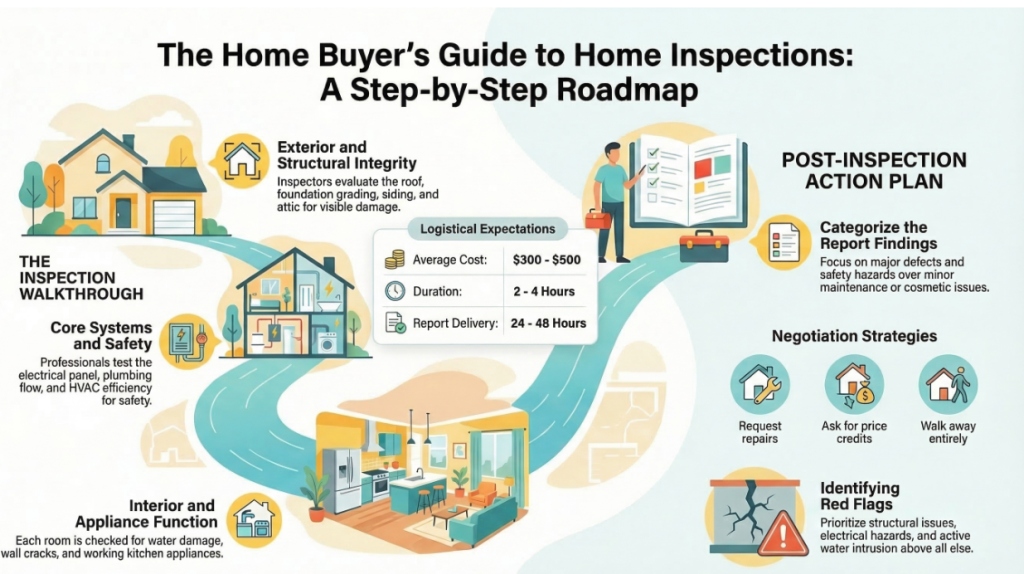
Buying a home is exciting. But it can also feel stressful. One of the biggest sources of worry for buyers is the home inspection. You might wonder what the inspector will find. You might worry about what happens if something is wrong.
Here is the good news. Knowing what to expect from a home inspection makes the whole process much easier. When you understand each step, you feel more in control. You can ask the right questions. And you can make smarter decisions.
This guide walks you through everything. We cover what happens before, during, and after the inspection. By the end, you will know exactly what to look for and what to do next.
What Is a Home Inspection?
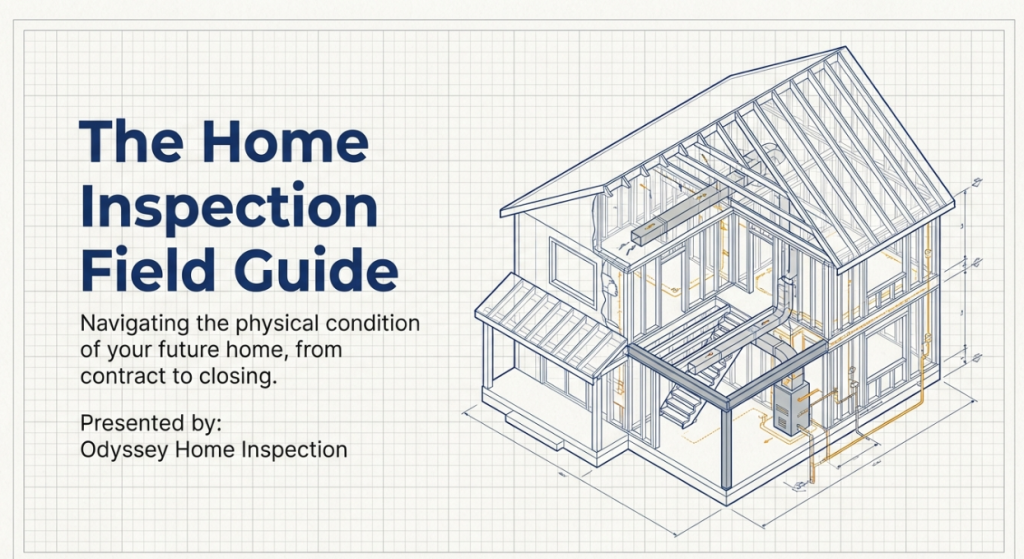
A home inspection is a close look at a property’s condition. A trained inspector examines the home from top to bottom. The goal is to find problems before you buy.
The inspection is non-invasive. That means the inspector looks at what can be seen. They do not open walls or tear up floors. But they check a lot of areas — from the roof to the basement.
Here are a few key facts to know:
- Who orders it: Usually the buyer pays for the inspection.
- When it happens: After your offer is accepted, but before closing.
- How much it costs: Most inspections run between $300 and $500. Larger homes may cost more.
- How long it takes: Plan for two to four hours, depending on the size of the home.
Before the Inspection: How to Prepare
A little preparation goes a long way. Here is what to do before inspection day.
Find a Qualified Inspector
Not all inspectors are the same. Look for someone with a recognized certification. Two of the most trusted are InterNACHI and ASHI. Ask your real estate agent for a referral. Read online reviews too.
Attend the Inspection — Do Not Skip It
You have the right to be there. And you should be. Walking through the home with the inspector is one of the best things you can do. You will see issues firsthand. You can ask questions on the spot. Reading about a problem in a report is not the same as seeing it yourself.
What to Bring
- A notebook or your phone for notes
- A list of questions you want to ask
- A camera or the ability to take photos
Step-by-Step: What Happens During a Home Inspection
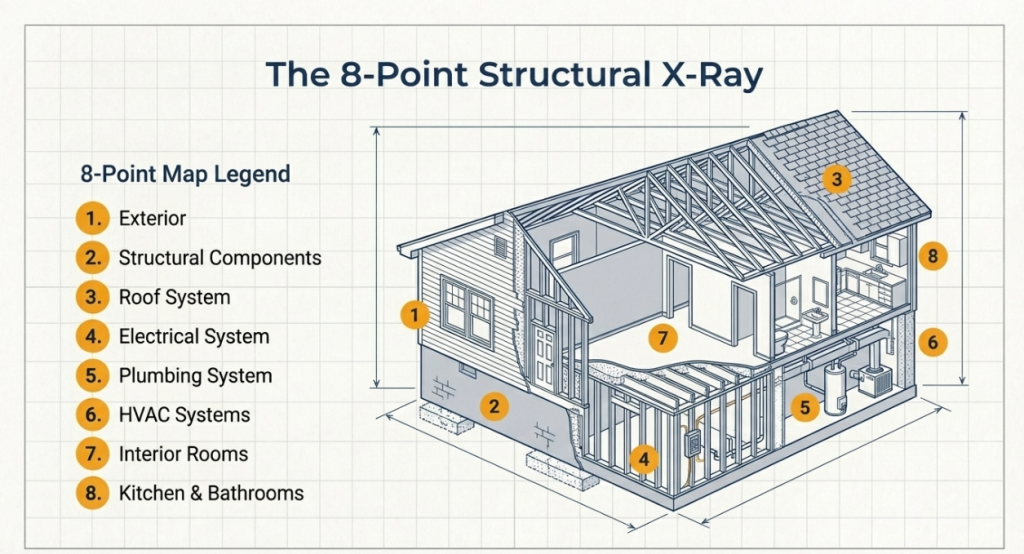
Here is a walkthrough of what the inspector will check. Most inspectors follow a similar order, though they may adjust based on the home.
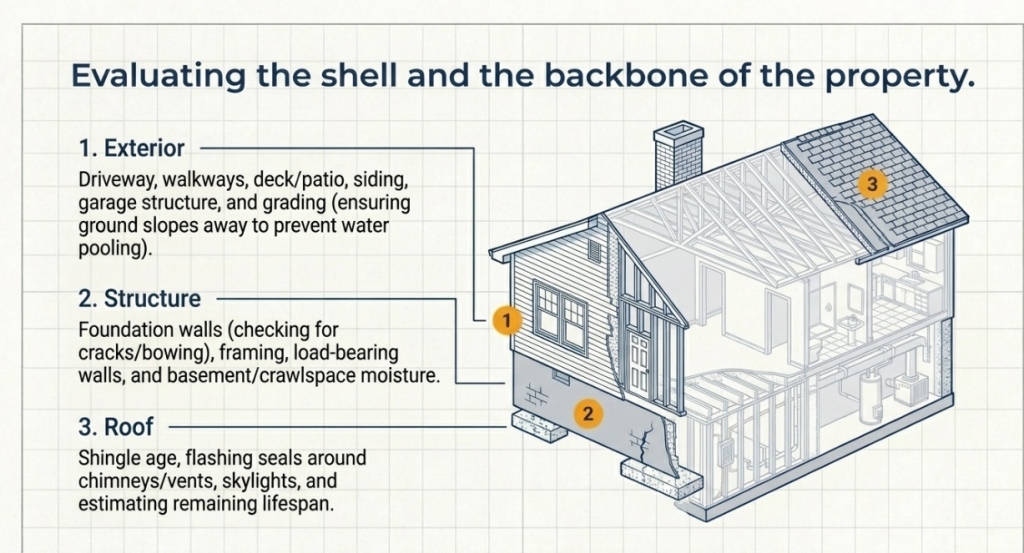
Step 1 — Exterior Inspection
The inspector starts outside. They walk around the full property and look for visible damage or concerns.
What they check:
- Roof condition — shingles, gutters, and downspouts
- Foundation and grading — does the ground slope away from the home to prevent water pooling?
- Siding, windows, and doors
- Driveway, walkways, and any deck or patio
- Garage — door function, structure, and opener
Step 2 — Structural Components
The structure is the backbone of the home. If there are structural problems, they can be costly to fix. The inspector looks carefully at these areas.
- Foundation walls — any cracks, bowing, or signs of water getting in?
- Framing and load-bearing walls
- Attic structure and insulation
- Basement or crawlspace — moisture and structural condition
Step 3 — Roof Inspection
A roof replacement is one of the most expensive repairs a homeowner can face. The inspector checks the roof’s current state and estimates how much life is left in it.
- Shingle age and any visible damage
- Flashing around chimneys and vents — is it sealed properly?
- Skylights and ventilation
- Estimated remaining lifespan of the roof
Step 4 — Electrical System
Electrical problems can be serious. They can cause fires or put people at risk. The inspector checks the system to make sure it is safe.
- The electrical panel — age, breaker condition, and capacity
- Outlets and switches — including GFCI protection in kitchens and bathrooms
- Visible wiring — looking for older types like knob-and-tube or aluminum
- Grounding and any safety hazards
Step 5 — Plumbing System
Plumbing issues can range from minor leaks to major pipe failures. The inspector checks the water supply and drainage throughout the home.
- Water pressure and flow
- Water heater — age, condition, and safety valve
- Pipes — material, signs of corrosion, or active leaks
- Drains and sewage — looking for slow drains or signs of backup
Step 6 — HVAC Systems
HVAC stands for heating, ventilation, and air conditioning. These systems keep your home comfortable year-round. Replacing them is expensive, so their condition matters.
- Furnace — age, filters, and whether it runs properly
- Air conditioning unit — age and efficiency
- Ductwork and vents — any damage or blockages?
- Thermostat operation
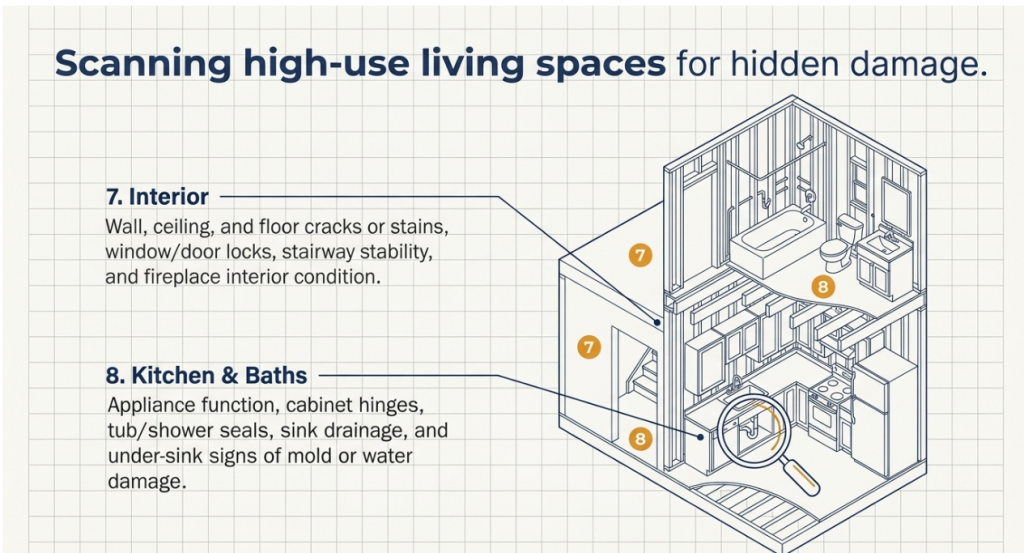
Step 7 — Interior Inspection
Once inside, the inspector goes room by room. They look for anything that could signal a hidden problem.
- Walls, ceilings, and floors — any cracks, stains, or uneven surfaces?
- Windows and doors — do they open, close, and lock properly?
- Stairways and railings — are they stable and safe?
- Fireplaces and chimneys — interior condition
Step 8 — Kitchen and Bathrooms
These rooms see a lot of daily use. They are also the areas most likely to show water damage or plumbing problems.
- Appliances — do they work? Is the range hood vented properly?
- Cabinet condition — hinges, doors, and structure
- Sinks, faucets, and drainage
- Toilet, tub, and shower seals
- Under sinks — any signs of water damage or mold?
What a Home Inspector Will NOT Check
A standard home inspection covers a lot. But it does not cover everything. There are some areas that require a separate specialist. These include:
- Pest or termite inspection — requires a pest control professional
- Mold testing — a separate test if mold is suspected
- Sewer scope — a camera inspection of the sewer line
- Radon or asbestos testing — done by specialists
- Behind walls or under flooring — the standard inspection is visual only
- Swimming pools — often excluded or priced separately
If anything raises concern during the inspection, ask about scheduling a specialty inspection. It is better to know upfront than to be surprised later.
After the Inspection: Understanding Your Report
Once the inspection is done, the inspector writes a detailed report. You will usually receive it within 24 to 48 hours. It includes photos, notes, and ratings for each area of the home.
How to Read the Report
Reports can be long. Do not let the length scare you. Focus on three categories:
- Major defects — structural or safety issues that need immediate attention
- Minor issues — smaller problems that are common and manageable
- Maintenance items — routine upkeep the home needs over time
Red Flags to Watch For
Some findings are more serious than others. Pay close attention to any mention of:
- Structural issues — foundation cracks or wall damage
- Electrical hazards — outdated panels or faulty wiring
- Active water intrusion — leaks or water getting into the home
- HVAC failure — systems that no longer work
- Mold or pest damage — signs of long-term moisture or infestation
What to Do With the Inspection Results
The inspection report does not end the deal. It opens a conversation. Here are your main options once you have the results.
Option 1: Request Repairs
You can ask the seller to fix specific issues before closing. Focus on safety problems and major defects. Minor cosmetic issues are usually not worth negotiating over.
Option 2: Ask for a Price Reduction or Credit
Instead of repairs, you can ask for a lower price or a credit at closing. This way, you handle the repairs yourself after you move in.
Option 3: Walk Away
If the inspection reveals serious problems that the seller will not address, you can walk away. In most cases, your inspection contingency allows you to do this without losing your deposit.
Option 4: Accept As-Is
You can also accept the home with its issues and plan for repairs down the road. This makes sense when issues are minor or when you are getting a great deal on the price.
Always prioritize safety issues first. Cosmetic problems can wait. Work with your real estate agent to figure out the best approach for your situation.
Common Home Inspection Findings
Most home inspection reports will flag at least a few issues. That is normal. Even well-maintained homes have things that need attention. Here are some of the most common findings:
- Roof wear or age — shingles near the end of their lifespan
- Improper grading or drainage — water flowing toward the home
- Outdated electrical panels — older panels that may not meet current standards
- Aging water heater — units past their expected service life
- Missing GFCI outlets — safety outlets required in wet areas
- Failed caulking or weatherstripping — gaps that let in air and moisture
Seeing a long list in your report can feel alarming. But remember — it is about severity, not quantity. Many findings are routine maintenance items. They do not mean the home is a bad buy.
Frequently Asked Questions
Can a house fail a home inspection?
No. Inspections do not pass or fail. The report simply lists what the inspector found. It is up to you and the seller to decide how to handle any issues.
Should the seller be present?
It is common for sellers to leave during the inspection. Their presence can make buyers feel uncomfortable asking questions. Most agents prefer sellers are not present.
What if the inspector misses something?
Inspectors are trained professionals, but they are not perfect. That is why attending the inspection and asking questions matters. For big concerns, you can also hire specialists for a closer look.
Is a new construction home inspection necessary?
Yes. New homes can have problems too. Builders work fast and mistakes happen. Getting an independent inspection on a new build is always a smart move.
How is a home inspection different from an appraisal?
An inspection looks at the condition of the home. An appraisal looks at its market value. These are two different things, done by two different people. Both matter when buying a home.
Conclusion
A home inspection is one of the most important steps in buying a home. It protects your investment. It gives you real information about the property. And it puts you in a stronger position to negotiate.
Show up. Ask questions. Read your report carefully. The more you understand, the better your decisions will be.
Now that you know what to expect from a home inspection, you are ready for this step with confidence. If you need help finding a qualified inspector or navigating the results, reach out to your real estate agent. They are there to guide you.
Ready to take the next step? Contact your real estate agent today, download our home inspection checklist, or book a consultation to get started.
SEO & On-Page Reference Notes
| Element | Recommendation |
| Primary Keyword | what to expect from a home inspection |
| LSI Keywords | home inspection checklist, home inspector, home inspection report, home buying process |
| Meta Title | What to Expect From a Home Inspection Step by Step |
| Meta Description | Wondering what to expect from a home inspection? Our step-by-step guide covers every stage so you are fully prepared. |
| Internal Links | Home buying guide, negotiation tips, closing process |
| External Links | InterNACHI, ASHI inspector directories |
| Image Alt Tags | home inspector checking roof, home inspection checklist |
| Schema Type | HowTo Schema recommended |