
Table of contents
Introduction
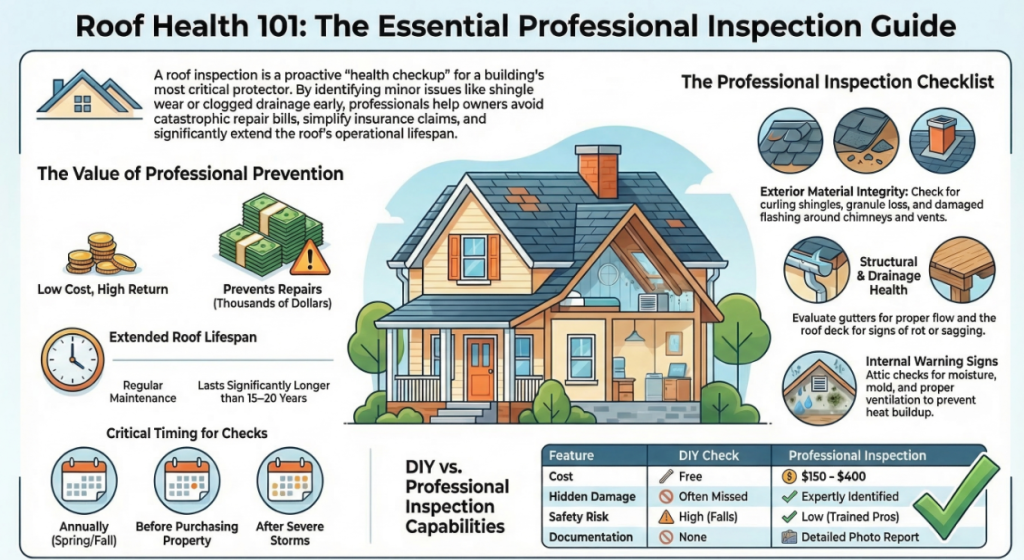
Your roof is one of the most important parts of your home. It keeps you, your family, and everything inside safe from rain, wind, heat, and cold. But most property owners only think about their roof when something goes wrong, and that is usually when the costs start adding up fast.
A roof inspection is one of the simplest ways to avoid big repair bills. When a professional takes a close look at your roof on a regular basis, small problems get found and fixed before they turn into expensive damage. According to roofing experts, catching a minor issue early can save property owners thousands of dollars in repairs down the line.
Think of it like a routine checkup at the doctor. You do not wait until you are seriously ill to see a physician. The same logic applies to your roof. Regular inspections protect your property value, extend the life of your roof, and give you peace of mind all year long.
What Is a Roof Inspection?
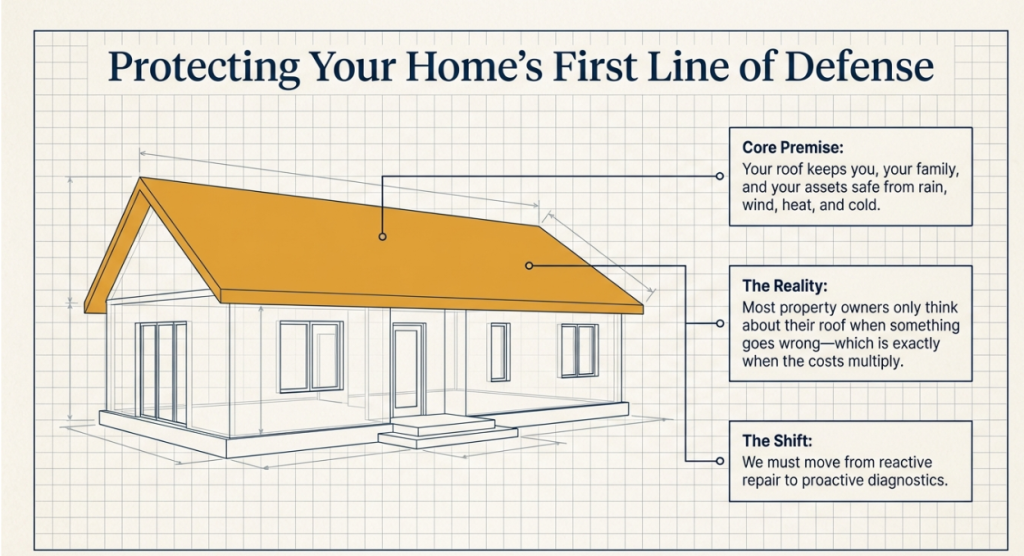
A roof inspection is a thorough check of your roof carried out by a trained professional. The inspector looks at every part of your roof, inside and out, to find signs of damage, wear, or potential problems.
Some homeowners try to check their own roofs by looking from the ground or climbing up a ladder. While that can help you spot obvious damage like missing shingles, it is not the same as a professional inspection. A trained inspector knows exactly what to look for and can identify issues that are easy to miss without proper knowledge and experience.
Here is what a professional roof inspection typically covers:
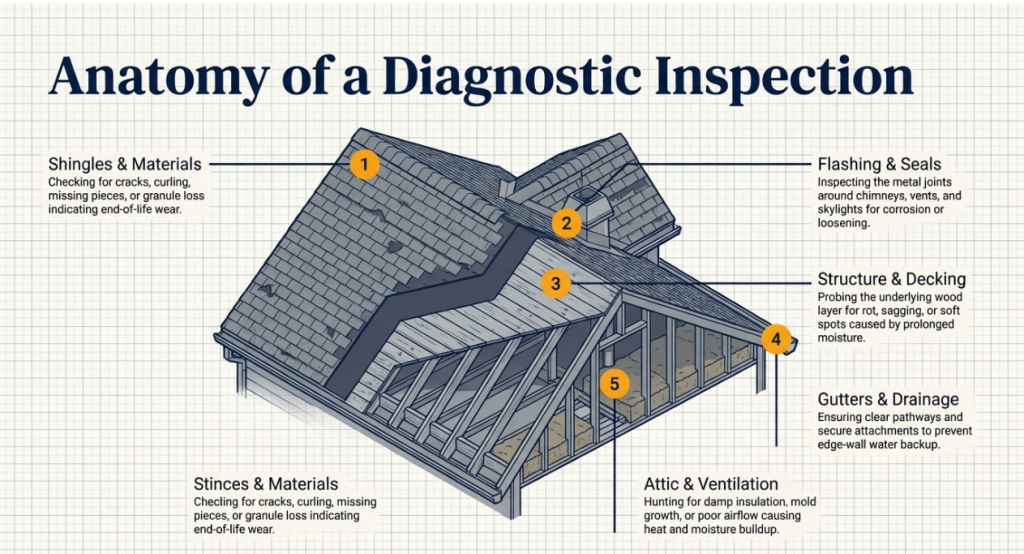
- Shingles and roofing materials
- Flashing around chimneys, vents, and skylights
- Gutters and downspouts
- Roof structure and decking
- Attic ventilation and insulation
- Signs of leaks or water damage
Types of Roof Inspections
Not all roof inspections are the same. Depending on your situation, there are different types of inspections that serve different purposes.
3.1 Routine or Preventive Inspections
This is the most common type. A routine inspection is scheduled on a regular basis, usually once or twice a year. The goal is to catch small problems early so they do not grow into something more serious.
Most roofing professionals recommend getting your roof inspected at least once a year. The best times are usually in spring after winter weather or in fall before the cold season begins. Regular inspections are especially important if your roof is more than ten years old.
3.2 Pre-Purchase Inspections
If you are thinking about buying a property, a roof inspection before closing is a very smart move. A pre-purchase inspection gives you a clear picture of the roof’s condition so there are no surprises after you move in.
Inspectors will check the age of the roof, the condition of the materials, and any signs of existing damage or repairs. This information can also give you room to negotiate the sale price if problems are found.
3.3 Post-Storm Inspections
After a heavy storm with strong winds, hail, or heavy rain, your roof can take a beating. Some of this damage may not be visible from the ground but can still lead to leaks and structural problems over time.
A post-storm inspection helps you document any damage quickly. This is especially important if you plan to file an insurance claim. Having a professional report with photos and detailed findings can make the claims process much smoother.
Key Areas Checked During a Roof Inspection
A thorough roof inspection covers many different parts of your roof and the areas connected to it. Here is a closer look at what gets checked.
Roof Structure and Decking
The decking is the layer of wood underneath your roofing material. Inspectors look for signs of rot, sagging, or soft spots that could mean water has been getting in for a while.
Shingles and Roofing Materials
Shingles protect your roof from the elements. Inspectors check for cracked, curling, or missing shingles. They also look for granule loss, which is a sign that your shingles are wearing out and may need replacing soon.
Flashing and Seals
Flashing is the metal material used to seal joints around chimneys, vents, and skylights. When flashing becomes loose or corroded, water can sneak underneath and cause damage to your home’s interior.
Gutters, Downspouts, and Drainage
Clogged or damaged gutters can cause water to back up and damage your roof’s edge and walls. Inspectors check that gutters are clean, properly attached, and draining correctly.
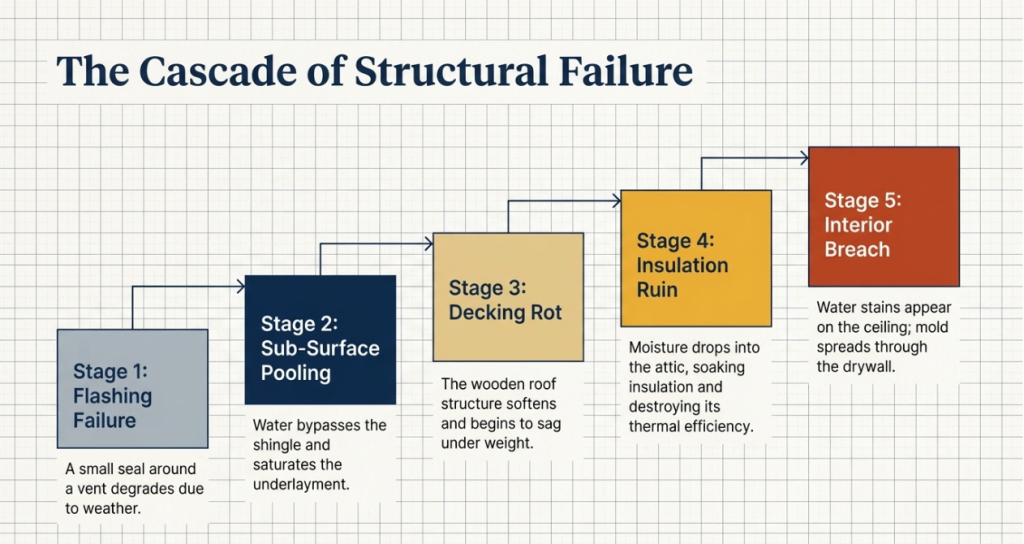
Signs of Leaks or Water Damage Indoors
Water stains on ceilings, damp insulation in the attic, or mold growth are all signs that your roof may be leaking. Inspectors often check the attic to look for these warning signs from the inside.
Benefits of Professional Roof Inspections
Getting a professional inspection is an investment that pays off in many ways.
Early Detection of Costly Issues
A small leak found early might cost a few hundred dollars to fix. The same leak left undetected for months can cause damage to ceilings, walls, and insulation that runs into the thousands. Early detection is the biggest advantage of regular inspections.
Extended Roof Lifespan
Proper maintenance and timely repairs can significantly extend the life of your roof. Instead of replacing a roof every 15 to 20 years, well-maintained roofs can last much longer, saving you a lot of money over time.
Insurance Compliance and Claim Support
Many insurance policies require that your roof be maintained in good condition. Having regular inspection records shows your insurer that you have been responsible. When storm damage occurs, a professional report also speeds up the claims process.
Peace of Mind
Knowing your roof is in good shape means one less thing to worry about. Whether it is a heavy rainstorm or a hot summer, you can feel confident that your home is protected.
How to Choose a Roof Inspection Service
With so many roofing companies around, it can be hard to know who to trust. Here are some things to look for when choosing a roof inspection service.
Certification and Experience
Look for inspectors who are certified by recognized roofing organizations. Experience matters too. An inspector who has worked on many different types of roofs will know what to look for in your specific situation.
Reputation and Reviews
Check online reviews and ask for references. A company with consistently positive feedback from past customers is usually a reliable choice. Ask neighbors or friends if they have someone they would recommend.
Detailed Reporting with Photos
A good inspection service should provide you with a written report that includes photos of any issues found. This gives you a clear record of your roof’s condition and makes it easier to track changes over time.
Cost vs. Value
Do not always go with the cheapest option. A thorough inspection that finds a problem before it becomes a big repair is worth every dollar. Compare a few quotes and look at what is included before you decide.
DIY Roof Checks vs. Professional Inspections
Some homeowners choose to inspect their own roofs to save money. While there is nothing wrong with keeping an eye on things from the ground or checking your attic for signs of leaks, a DIY check is not a replacement for a professional inspection.
Pros of DIY checks:
- Free and can be done anytime
- Helps you spot obvious problems like missing shingles or clogged gutters
- Good for quick checks after a storm
Cons of DIY checks:
- Climbing on a roof is dangerous without proper equipment
- Easy to miss hidden damage like small cracks or damaged flashing
- No professional report for insurance purposes
- Risk of making problems worse if you step in the wrong spot
For a proper assessment of your roof’s health, a professional inspection is always the safer and more reliable option.
Cost of Roof Inspections
The cost of a roof inspection can vary depending on several factors, but it is generally much more affordable than most people expect.
On average, a basic roof inspection costs between $150 and $400. Larger or more complex roofs, or inspections that include drone photography or thermal imaging, may cost more. Some roofing companies offer free inspections as part of their service, especially after a storm.
Factors that affect the cost include:
- The size and pitch of your roof
- The type of roofing material
- Your location
- The level of detail in the inspection report
- Any additional services like drone imaging or moisture testing
When you compare the inspection cost to what you could spend on major repairs or a full roof replacement, the investment is clearly worth it.
Common Problems Detected During Inspections
Here are some of the most common issues that roof inspectors find during their checks.
Leaks and Water Damage
Water intrusion is one of the most common roof problems. It can be caused by damaged shingles, failed flashing, or blocked gutters. Left untreated, leaks can damage walls, ceilings, and even the foundation of your home.
Damaged or Missing Shingles
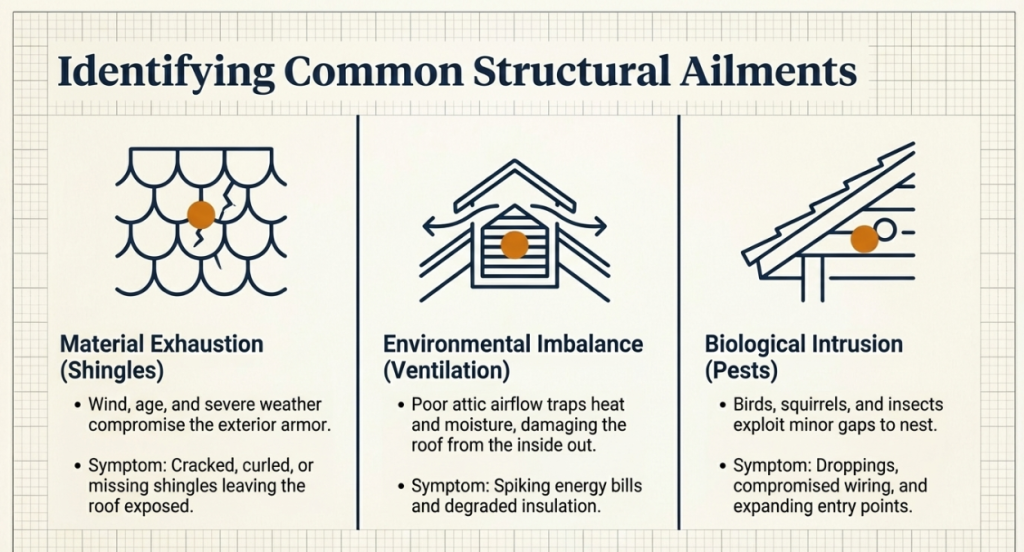
Wind, age, and severe weather can crack, curl, or blow away shingles. Missing or damaged shingles leave your roof exposed to the elements and need to be replaced as soon as possible.
Structural Issues or Sagging
A sagging roofline can indicate serious structural damage, often caused by long-term water intrusion or overloading from snow and ice. This type of damage needs immediate attention from a professional.
Ventilation or Insulation Problems
Poor ventilation in your attic can cause heat and moisture buildup, which damages your roof from the inside out. It can also lead to higher energy bills. An inspector will check that your attic has adequate airflow.
Pest Infestations
Birds, squirrels, and insects can find their way into your roof and cause damage over time. Inspectors often look for signs of nesting, droppings, or entry points that need to be sealed.
Conclusion
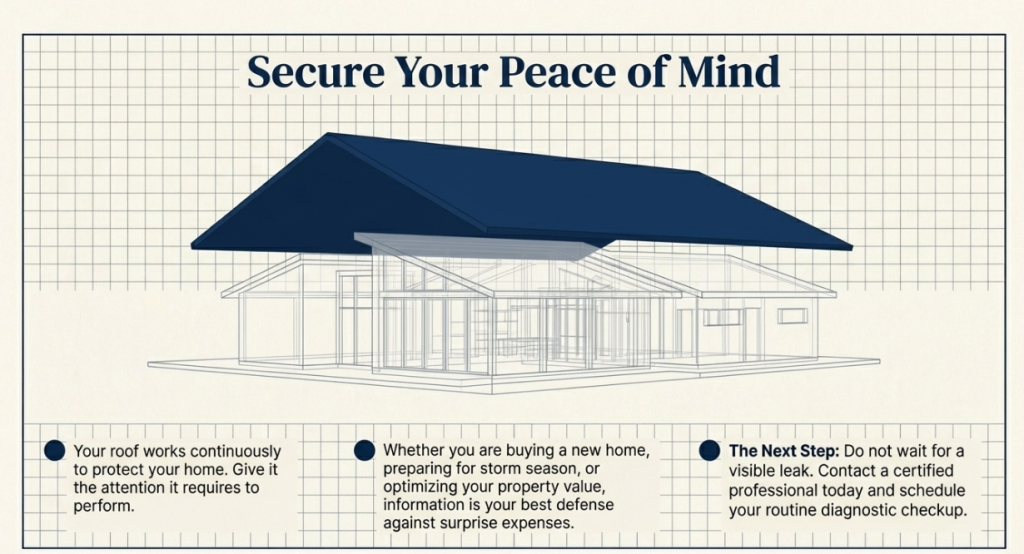
Your roof works hard every day to protect your home and everything in it. The least you can do is give it the attention it deserves. Regular roof inspections are one of the smartest and most cost-effective things a property owner can do.
Whether you are buying a new home, preparing for storm season, or simply staying on top of maintenance, a professional roof inspection gives you the information you need to make smart decisions. It helps you avoid surprises, keeps repair costs low, and protects the value of your property for years to come.
Do not wait for a visible problem to take action. Schedule your roof inspection today and stay ahead of any issues before they become costly headaches.