


Table of contents
Everything you need to spot problems early, inspect your home yourself, and know when to call for help.
Everything you need to spot problems early, inspect your home yourself, and know when to call for help.
Why Foundation Health Matters
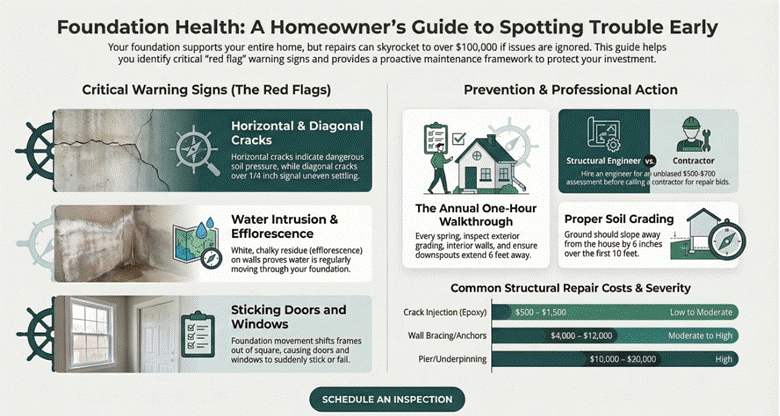
Your home’s foundation holds up everything above it. The walls, the floors, the roof, all of it. When the foundation starts to fail, the whole house can pay the price.
Foundation repairs can run anywhere from a few hundred dollars for a small crack to well over $100,000 for major structural work. The good news is that most problems, when caught early, are much easier and cheaper to fix.
This guide is written for homeowners at every stage: whether you just bought a house, you’re planning to sell, or you’ve lived in the same place for years and want to make sure everything is still solid underneath you. You don’t need to be a contractor to do a solid basic inspection. You just need to know what to look for.
By the end of this guide, you’ll know the warning signs of foundation trouble, how to do a step-by-step walkthrough of your own home, and exactly when it’s time to bring in a professional.
Foundation Types: Know What You Have
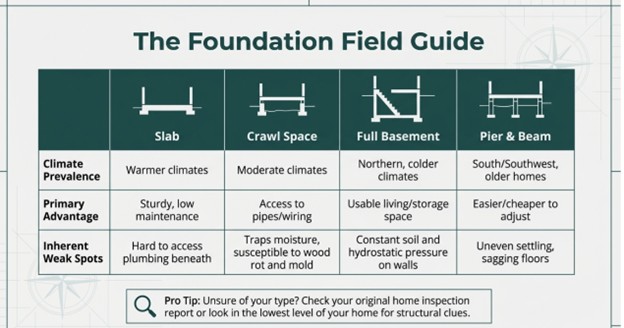
Before you inspect anything, it helps to know what kind of foundation your home sits on. Different types have different weak spots, and knowing yours will help you focus your inspection in the right places.
Slab Foundation
A slab foundation is a thick, flat layer of concrete poured directly on the ground. It’s common in warmer climates where the soil doesn’t freeze. Slabs are sturdy and low maintenance, but when something goes wrong, it can be harder to access pipes or fix issues underneath. Watch for cracks running across the slab, uneven floors, or doors that suddenly stick.
Crawl Space
A crawl space sits between the ground and the first floor, usually 18 to 36 inches high. It gives you access to plumbing and wiring, but it can collect moisture easily. If a crawl space isn’t properly ventilated or sealed, you’ll get mold, wood rot, and eventually structural damage. A flashlight and a willingness to get a little dirty are all you need to inspect one.
Full Basement
A full basement is the most common foundation type in colder northern climates. It gives you usable living or storage space, but the walls are constantly holding back soil and water pressure. Horizontal cracks in basement walls are a serious sign of this pressure building up. Vertical cracks are often less serious but still worth monitoring.
Pier and Beam
Older homes, especially in the South and Southwest, often sit on piers and beams rather than a continuous foundation. The home rests on a network of concrete or wood piers. Over time, these can settle unevenly, causing floors to slope or sag. The good news is that pier and beam foundations are usually easier and cheaper to repair than a full concrete foundation.
Pro Tip: Not sure what type of foundation you have? Check your home inspection report from when you bought the house, or simply look in your basement or crawl space for clues about how the structure is supported.
Top Warning Signs of Foundation Problems
Your house will usually tell you when something is wrong. You just have to know what signals to pay attention to. Here are the most common ones to look for.
Interior Cracks
Not all cracks are equal. Here’s a simple way to think about them:
- Vertical cracks: These run straight up and down. They’re often caused by normal concrete shrinkage as a house settles and are usually not serious on their own. Keep an eye on them and mark the ends with a pencil and date to track if they’re growing.
- Diagonal cracks: These run at an angle, often from the corners of windows or doors. They can signal that one part of the foundation is settling faster than another. If a diagonal crack is wider than 1/4 inch, have it looked at.
- Horizontal cracks: These are the most serious. They typically appear in basement walls and mean the soil outside is pushing in. Horizontal cracks should always be evaluated by a professional as soon as possible.
Exterior Cracks
Walk around the outside of your home and look at the foundation walls and the brick or siding above them. Stair-step cracks in brick or block walls follow the mortar joints and look like a staircase pattern. These often point to settling or shifting in one area. Concrete spalling (where the surface flakes or chips away) can let water in and speed up damage over time.
Sticking Doors and Windows
If your doors or windows suddenly start sticking or won’t close properly, it might not just be humidity. Foundation movement can shift door and window frames out of square. Pay special attention to interior doors on the ground floor and to windows along exterior walls.
Uneven or Sloping Floors
Walk across every room and pay attention to how the floor feels underfoot. A simple marble test can reveal a lot: set a marble in the middle of the floor and see if it rolls. Floors that slope more than an inch over 15 feet are worth investigating. In pier and beam homes, this is especially common.
Water Intrusion and Efflorescence
Water in the basement or crawl space is always a red flag. Even if it dries up on its own, repeated water intrusion wears down concrete and encourages mold. Efflorescence is the white, chalky residue left behind when water passes through concrete and evaporates. It’s a sign that water is moving through your walls regularly.
Gaps Between Walls, Ceilings, and Floors
Look for gaps where the walls meet the ceiling or where the floor meets the wall. Small gaps can be cosmetic, but large or growing gaps suggest the structure is moving. This is especially telling if the gaps appear suddenly or seem to be getting bigger over time.
Bowing or Leaning Walls
Stand at one end of a basement wall and look down its length like you’re sighting down a pool cue. Any visible curve or lean means the wall is under pressure. This is one of the more urgent warning signs and usually requires professional attention.
Step-by-Step DIY Inspection Checklist
You don’t need special training to do a basic foundation inspection. The goal is to document what you see clearly so you can track changes over time or share your findings with a professional.
What You’ll Need
- Flashlight or headlamp (a bright one)
- Tape measure
- Level (a standard 4-foot level works great)
- Notepad and pen or your phone’s camera
- Moisture meter (optional but helpful, available for under $20)
- Old clothes you don’t mind getting dirty
Step 1: Exterior Walkthrough
Start outside and work your way around the entire perimeter of the house. Look for:
- Cracks in the foundation walls or the brick and siding above them
- Soil that slopes toward the house instead of away from it (water should drain away, not pool near the foundation)
- Downspouts that dump water right next to the foundation instead of directing it several feet away
- Soil or mulch piled against the wood framing or siding (this traps moisture)
- Trees or large shrubs planted close to the house (roots can cause serious damage over time)
Step 2: Basement or Crawl Space
Take your flashlight and go in. Look at every wall carefully. You’re checking for:
- Cracks, especially horizontal ones
- Staining, dampness, or white mineral deposits (efflorescence)
- Wood that looks dark, soft, or shows signs of rot or mold
- Posts or columns that look tilted or have rot at the base
- Any musty smell, which is a sign of ongoing moisture
Step 3: Upper Floor Check
Move through the inside of the house, room by room. Look for:
- Doors or windows that stick or don’t close smoothly
- Cracks in drywall, especially running diagonally from corners of doors and windows
- Floors that feel springy, soft, or visibly uneven
- Gaps where walls meet the ceiling or floor
Step 4: Document Everything
Take photos of anything that looks off. Write down where you found it, how big it is, and the date. If you find a crack, mark both ends with a pencil and note the date so you can check back in a few months to see if it’s growing.
Pro Tip: Do this walkthrough once a year, ideally in the spring after the wet season. Changes that appear quickly are almost always more concerning than things that have been stable for years.
When to Call a Professional
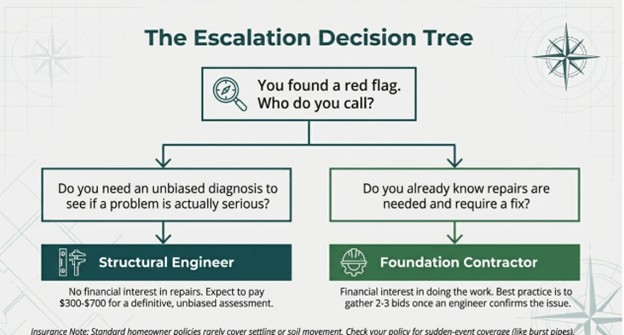
Doing your own inspection is a great habit. But there are situations where you need an expert’s eyes, not just your own.
Red Flags That Need Immediate Attention
- Any horizontal crack in a basement or foundation wall
- A wall that is visibly bowing or leaning inward
- Cracks that are wider than 1/2 inch
- Cracks that have grown noticeably in a short period of time
- Floors that have developed a sudden, significant slope
- Water that regularly pools in the basement or crawl space
Structural Engineer vs. Foundation Contractor
This is a distinction worth understanding before you pick up the phone.
A structural engineer is the right first call when you need an honest, unbiased assessment. They have no financial interest in recommending repairs and can tell you definitively whether a problem is serious or not. Expect to pay $300 to $700 for a full structural inspection.
A foundation contractor is who you call once you already know repairs are needed. They can give you a bid and do the work, but keep in mind they have a financial interest in finding problems. Getting two or three bids from different contractors is always a smart move.
What a Professional Inspection Covers
- A complete review of all visible foundation walls, inside and out
- Assessment of drainage and grading around the home
- Measurement of any cracks and evaluation of their cause
- A written report with findings and recommended next steps
Questions to Ask Before You Hire
- Are you licensed and insured in this state?
- Can you show me references from similar jobs in this area?
- What does your repair warranty cover and for how long?
- Will you provide a written estimate before any work begins?
Foundation Repair Costs and Common Solutions
Foundation repair costs vary a lot depending on the type of problem, how far along it is, and where you live. Here’s a general breakdown of common repairs.
Minor Crack Repair
Small cracks that are stable and not letting water in can often be sealed with epoxy injection or polyurethane foam. This is a relatively low-cost fix when done early. Waiting until cracks widen or multiply will increase the cost significantly.
Waterproofing
Interior waterproofing usually involves installing a drainage system along the basement floor with a sump pump to remove water before it causes damage. Exterior waterproofing is more disruptive and expensive since it requires digging around the foundation, but it stops water at the source. The right choice depends on how severe the water issue is.
Pier and Underpinning
When a foundation has settled or sunk, underpinning with steel piers is one of the most common fixes. Piers are driven into stable soil below the foundation and then used to lift and stabilize the home. It’s a significant job, but it can stop ongoing movement and sometimes reverse some of the settling.
Wall Bracing and Anchors
Bowing walls that aren’t too far gone can often be stabilized with carbon fiber straps or wall anchors. These systems keep the wall from moving further without requiring the wall to be rebuilt. The sooner you act on a bowing wall, the better your options will be.
Average Repair Costs by Type
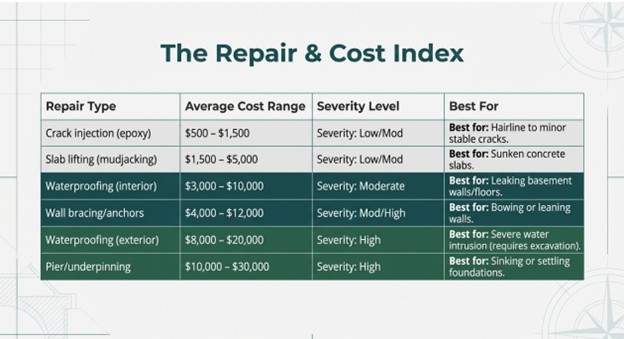
| Repair Type | Avg. Cost Range | Severity Level | Best For |
| Crack injection (epoxy) | $500 – $1,500 | Low to moderate | Hairline to minor cracks |
| Waterproofing (interior) | $3,000 – $10,000 | Moderate | Leaking basement walls/floor |
| Waterproofing (exterior) | $8,000 – $20,000 | High | Severe water intrusion |
| Pier/underpinning | $10,000 – $30,000 | High | Sinking or settling foundation |
| Wall bracing/anchors | $4,000 – $12,000 | Moderate to high | Bowing or leaning walls |
| Slab lifting (mudjacking) | $1,500 – $5,000 | Low to moderate | Sunken concrete slabs |
What Does Home Insurance Cover?
Most standard homeowner’s insurance policies do not cover foundation repairs caused by settling, soil movement, or poor drainage. However, some damage caused by sudden events like a burst pipe might be covered. Check your policy carefully and talk to your insurance agent before assuming you have coverage.
Preventive Maintenance Tips
The best foundation problem is one that never happens. Most foundation issues come down to water and soil movement. Controlling those two things goes a long way.
Grade the Soil Away from Your Home
The ground around your house should slope away from the foundation by at least 6 inches over the first 10 feet. If water is pooling against your foundation after rain, regrading may be the single most impactful thing you can do for long-term foundation health.
Keep Your Gutters Clean and Extend Downspouts
Clogged gutters overflow and dump water right next to the foundation. Clean them at least twice a year. Make sure your downspouts extend at least 6 feet from the house. Splash blocks or flexible extensions are cheap and easy to install.
Manage Soil Moisture
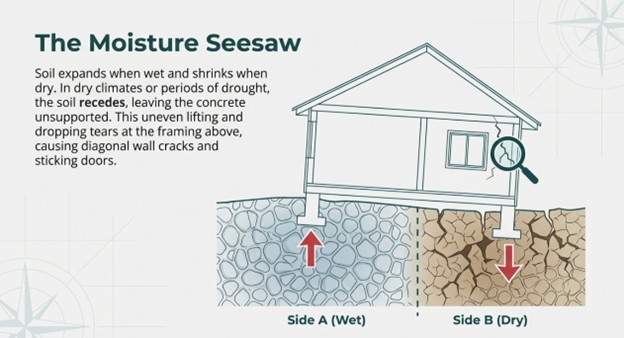
This one is often overlooked in dry climates. Soil shrinks and expands with moisture, and if it shrinks too much around your foundation, it can leave the foundation unsupported. During dry spells, running a soaker hose a few feet away from the foundation can help maintain consistent moisture levels in clay-heavy soils.
Watch Where You Plant
Large trees and shrubs planted close to the house can cause two kinds of trouble. Their roots can physically crack or push against the foundation over time, and large trees can pull huge amounts of moisture from the soil, causing it to shrink unevenly. Keep large trees at least 20 feet from the house. Smaller shrubs should stay at least 3 to 5 feet away.
Inspect Every Year
Put it on your calendar once a year. Spring is ideal because it comes right after the wet season when any water-related issues will be most visible. A one-hour walkthrough once a year can save you from a very unpleasant surprise down the road.
What to Do Next

Foundation problems are scary to think about, but most of them start small and give you plenty of warning before they become serious. The key is to pay attention and act early.
Here’s a quick summary of what you’ve learned:
- Know your foundation type so you know where to focus your inspection
- Learn the warning signs, especially horizontal cracks, bowing walls, and sticking doors
- Walk through your home at least once a year using the checklist in Section 4
- Call a structural engineer, not a contractor, when you need an honest assessment
- Focus on drainage, grading, and moisture control to prevent problems in the first place
This weekend is a great time to do a quick walkthrough. It only takes an hour and could save you tens of thousands of dollars in the long run.