


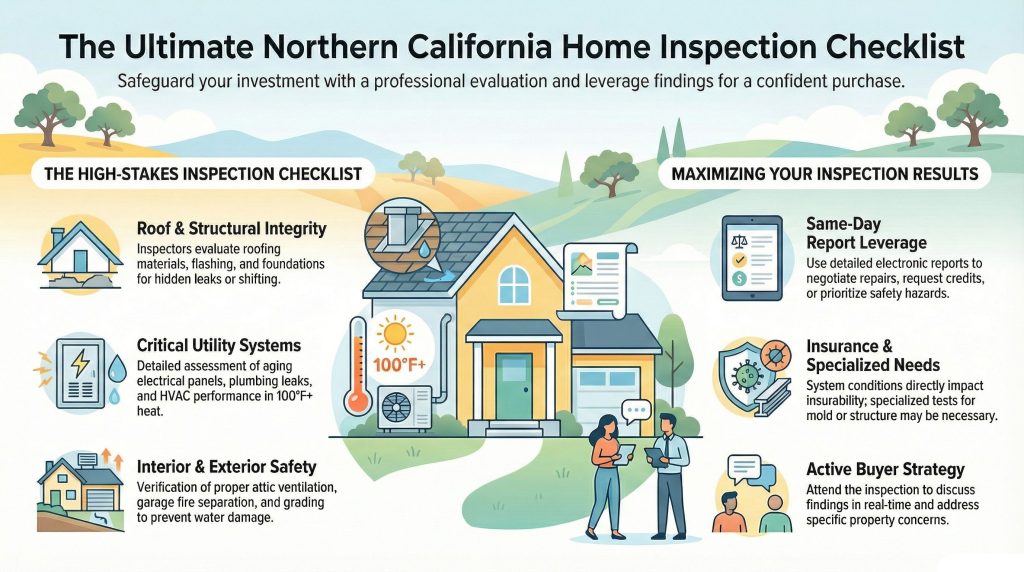
Buying a home is one of the biggest financial decisions you will ever make. Whether you are a first-time buyer shopping in Sacramento, relocating to the Citrus Heights area, or investing in property anywhere across Northern California, a professional home inspection is your strongest safeguard against costly surprises after closing. A thorough inspection uncovers hidden deficiencies, gives you negotiating leverage, and ultimately helps you make a confident, informed purchase.
At Odyssey Home Inspection, we deliver same-day electronic reports with detailed photos and descriptions so you can move quickly, especially when contingency timelines are tight. Below is a comprehensive checklist of what a certified home inspector evaluates during a general home inspection, along with guidance on how to use that information to protect your investment.
Why Every Buyer Needs a Home Inspection
A home may look move-in ready on the surface, but serious problems often hide behind fresh paint, new carpet, and staged furniture. Structural cracks, aging electrical panels, hidden water damage, and deteriorating roofing materials are just a few of the issues that a trained inspector can identify before they become your responsibility. A professional inspection report gives you the facts you need to negotiate repairs, request credits, or walk away from a deal that carries too much risk.
California law does not require buyers to get an inspection, but skipping one is a gamble most real estate professionals strongly advise against. The cost of an inspection is a fraction of what a single major repair could run you after move-in.
The Complete Home Inspection Checklist

A certified general home inspection covers all of the major systems and structural components of a property. Here is what your inspector should be evaluating from top to bottom.
1. Roof and Exterior Coverings
The roof is one of the most expensive components to repair or replace, and it is also one of the most common sources of hidden damage. Your inspector will physically access the roof whenever safely possible to evaluate the condition of shingles, tiles, or other roofing materials, along with flashing around penetrations like vents, chimneys, and skylights. Damaged or improperly installed roof flashing is a leading cause of leaks that can go undetected for months or years, gradually causing structural and mold damage inside the home.
Gutters, downspouts, and drainage paths are also assessed to confirm that water is being directed away from the foundation. At Odyssey Home Inspection, we always inspect the roof, it is not an area we skip or limit to a ground-level visual check.
Related: What Is Roof Flashing?
Related: Roof Leak Inspections
2. Foundation, Slabs, and Floor Structures
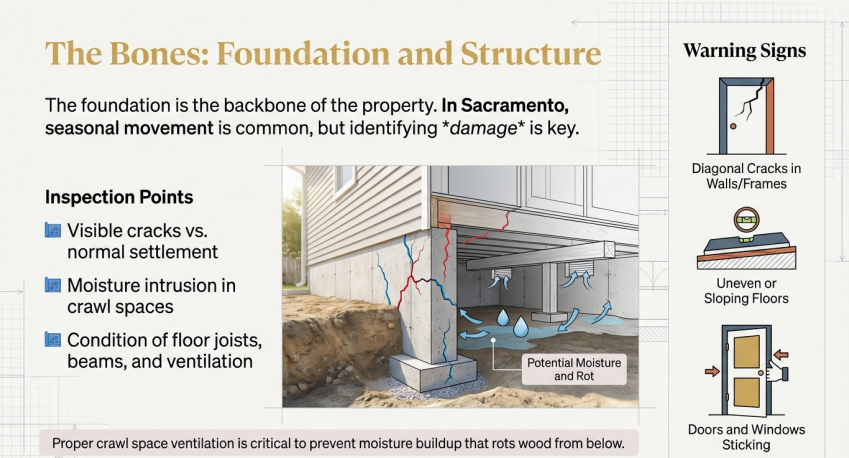
The foundation is the backbone of the entire property. Inspectors look for visible cracks, signs of settlement or shifting, moisture intrusion, and any evidence of previous repairs. In the Sacramento region, soil conditions and seasonal temperature swings can contribute to foundation movement over time. Your inspector will also examine crawl spaces, checking for adequate ventilation, moisture barriers, and the condition of floor joists and beams.
Related: Structural Inspection Services
3. Electrical Systems
Electrical issues are both a safety hazard and a potential deal-breaker. The inspection covers the main electrical panel, circuit breakers, wiring type and condition, grounding, and the presence of GFCI and AFCI protection in required areas such as kitchens, bathrooms, garages, and exterior outlets. Older homes in the Sacramento area may still have outdated wiring methods such as knob-and-tube or aluminum branch wiring, both of which can present increased fire risk and insurance complications.
4. Plumbing Systems
Your inspector will evaluate supply lines, drain and waste lines, water heaters, fixtures, and visible piping materials. Common findings include slow drains, active leaks under sinks, corroded galvanized pipes in older homes, and water heaters that are past their expected service life or improperly installed. The inspector also checks water pressure and looks for signs of previous leaks such as staining, warped materials, or mold growth.
Related: Mold Inspection and Testing
5. Heating, Ventilation, and Air Conditioning (HVAC)
Heating and cooling systems are tested for basic operation, and the inspector notes the age, type, and apparent condition of furnaces, air conditioners, heat pumps, and ductwork. In Northern California, where summer temperatures regularly exceed 100 degrees in the Sacramento Valley, a failing HVAC system is not something you want to discover after moving in. The inspector will also check air filters, thermostat operation, and visible ductwork for damage or disconnections.
If the home has a gas furnace in a condo or attached unit, there may be additional considerations around California regulations and replacement requirements.
Related: Can I Get Rid of My Old Gas Furnace in My Condo?
6. Interior Components: Doors, Windows, Walls, and Ceilings
Every room is evaluated for the operation of doors and windows, the condition of walls and ceilings, signs of water damage or staining, and any visible defects. Windows are checked for proper sealing, operation, and the presence of safety glazing where required. Inspectors also look for signs of settlement such as cracks above door frames, sticky doors, and uneven floors, which could point back to foundation concerns.
7. Exterior Walls, Siding, and Grading
The exterior inspection covers siding and cladding materials, trim, fascia, soffits, and the overall condition of exterior surfaces. Grading and drainage around the perimeter of the home are evaluated to ensure water flows away from the foundation rather than pooling against it. Vegetation growing against the structure, earth-to-wood contact, and damaged or missing weather barriers are all items that commonly appear in inspection reports.
8. Attic, Insulation, and Ventilation
The attic is inspected for proper insulation levels, ventilation, signs of moisture or condensation, roof sheathing condition from the underside, and any evidence of pest activity. Poor attic ventilation is a common issue in older Sacramento-area homes and can lead to premature roof deterioration, mold growth, and higher energy costs. The inspector checks for bathroom exhaust fans that terminate in the attic rather than venting to the exterior, a frequent deficiency that contributes to moisture problems.
9. Garage and Safety Features
The garage is checked for fire separation between the garage and living space, proper door operation including auto-reverse functionality on garage door openers, and the presence of required safety features. The inspector also looks for water heaters in the garage that lack required elevation or seismic strapping, and any electrical or storage conditions that could present a fire hazard.
Beyond the Standard Checklist: Specialized Inspections
A general home inspection is comprehensive, but there are situations where additional specialized inspections may be warranted. Depending on the age, location, and condition of the property, your inspector or real estate agent may recommend additional evaluations.
Mold inspection and testing is advisable when visible mold is present, there is a history of water damage, or musty odors are detected. Mold can affect indoor air quality and may indicate underlying moisture problems that need to be addressed.
Related: Mold Inspection and Testing
Structural inspections may be recommended when significant foundation cracks, visible settlement, or unusual framing conditions are observed during the general inspection. This type of focused evaluation goes deeper into the load-bearing components of the home.
For buyers purchasing newly built homes, a new construction inspection before the final walkthrough can catch builder defects and incomplete work before the warranty period begins. Even new homes have issues, construction defects are more common than most buyers expect.
Related: Why Do New Construction Homes Have Warranties?
Multi-family properties such as duplexes, triplexes, and fourplexes require specialized attention. Each unit, along with common areas and the roof, should receive its own detailed report.
Related: Multi-Family Inspections
What to Do With Your Inspection Report
Once your inspection is complete, you will receive a detailed electronic report with photographs and descriptions of every finding. At Odyssey Home Inspection, reports are delivered same day, on site, so you are never waiting around for critical information during a fast-moving transaction.
Review the report carefully with your real estate agent. Not every finding is a major concern, some items are routine maintenance recommendations, while others may be safety issues or significant deficiencies that warrant a repair request or further evaluation by a specialist. Your agent can help you prioritize which items to negotiate and how to frame your repair requests effectively.
Pay particular attention to the following categories of findings: safety hazards such as missing handrails, exposed wiring, or non-functional smoke and carbon monoxide detectors; major system deficiencies involving the roof, foundation, electrical, plumbing, or HVAC; active water intrusion or evidence of ongoing moisture problems; and any conditions that could affect insurability of the property.
Tips for Buyers Before and During the Inspection
Attend the inspection if possible. Walking the property with your inspector gives you a firsthand understanding of the home’s condition and allows you to ask questions in real time. A good inspector will take the time to explain findings and help you understand the difference between cosmetic issues and structural concerns.
Prepare a list of any specific concerns you noticed during showings, stains on ceilings, unusual odors, doors that stuck, or areas where the flooring felt uneven. Sharing these observations with your inspector helps ensure those areas get extra attention.
Do not let the length of an inspection report alarm you. A thorough report will always contain a significant number of items because a detailed inspector documents everything, including minor maintenance items. The goal is transparency, not a pass-or-fail grade.
A Note on Homeowners Insurance in California
The condition of a property, particularly the roof, electrical system, and plumbing, can directly affect your ability to obtain homeowners insurance. In recent years, insurance availability in parts of California has become a growing concern for buyers. Understanding the condition of these major systems before you close can help you avoid insurance surprises.
Related: Why Are Homeowners Insurance Companies Leaving California?
Schedule Your Home Inspection With Odyssey Home Inspection

Whether you are buying in Sacramento, Citrus Heights, San Jose, Truckee, or anywhere across Northern California, Odyssey Home Inspection provides the thorough, professional service you need to make a confident decision. Our certified home inspectors deliver detailed same-day reports, and our team is committed to exceeding industry standards on every inspection.
Call us at 707-321-5877 or visit fill the form to schedule your inspection today.